Thursday, July 29, 2010
Poll: New Systems

Wednesday, July 28, 2010
Who Wants to Go to the Library?

Libraries are an attempt to give a player more information about a game world, in hopes that it'll make it more immersive. Most RPG libraries consist of history, news, and the creator's own version of fan fiction. I barely read history in reality. What makes game creators think I'll read it in a fantasy world where my only goal is to get enough cash to buy that super cool weapon that'll cut through a bus?
Let's take a look at different types of libraries in games.
Examples of Good Libraries:
These are there for two reasons: skills and entertainment. In the Sims 3, this comes in handy because you save a ton of money on buying books for skills. Also, these libraries have computers to perform extra tasks.
Harvest Moon
Great reference tool. Harvest Moon's library is for what plants grow when. It tells you how to play mini games, how to plant crops, and you can actually meet people in there.
Tomb Raider
Each book in Lara's Mansion in Tomb Raider: Anniversary has a clue to solving the next puzzle. Without the books, it makes it harder to play the game. The books actually have purpose and are necessary.
Examples of Bad Libararies:
Legend of Legaia
I'm in the middle of a mist-ridden society, trying to find an exit; I'm not going to read your stupid diary. Legend of Legaia's libraries are of little use. They are mainly people's diaries about the mist, or just useless information that I can't do anything with. The only positive point to these libraries is sometimes you find new battle combinations. That's really about it.
Legend of Dragoon
The main library in the game is full of information. Information I care nothing about. I've all ready sat through some elder giving me a “in the beginning” speech, and I don't feel like sitting through more of it. Long narrative CGs + giant libraries = zzzzzzz
Oregon Trail Version 745 (Or however many they have now)
This is a menu option in the game, where you can study different diseases and treatments according to the time period. As informative as this is, HOLY CRAP there's a lot to look at. None of this information, however, is incredibly critical to the game. You still get bitten by a snake and die.
My problem isn't with RPGs trying to get across more information. My problem is how loquacious game creators feel like being when they make libraries. The point of a game is to play. If you want to write fan fiction, put it on the internet like everyone else.
Ways to Get Across Information:
There are different ways to get across game world history in a game without resorting to long winded libraries:
Dialogue
If the information is critical to the story, slip it into the dialogue. Not with a “in the beginning” CG, but with a simple, “Remember how...” or “We haven't had a famine this bad since [this event in history].”
Townsfolk
Townsfolk are notorious for useless information. Short bouts of useless information. If you're going to give out non-essential information, the best thing to do it to keep it short and coming out of crazy, useless people.
Letters
Instead of having characters find diaries or go to libraries, have them find single sheets of paper in offices and houses that explain things. This increases the entertainment value and still gets the point across.
If you want libraries in your game, I have nothing against you. Just know that I probably won't be stopping by.
Libraries in games should be more for reference then anything. References like synthesizing and alchemy, battle strategy, and simple gameplay are easy to put in libraries without boring the player to death.
Save libraries. Keep them useful.
Wednesday, March 24, 2010
Prompt: Rewrite the Opening
An opening CG scene is tricky. It needs to tempt the player to play the game, it needs to set up the mood for the entire game, and it needs to give an insight into what the game is about.
Your prompt: Rewrite the opening to this FMV from God of War:
Saturday, March 13, 2010
Couple Spotlight: The Prince and Farah

Farah and the Prince of Persia
Games: Prince of Persia: Sands of Time, Prince of Persia: Two Thrones
Nothing like two enemies brought together because everyone else has turned into sand-zombies.
The Prince (who has no name, despite the movie coming out this summer) is a glory-seeker who steals Farah's father's enchanted dagger. Not knowing the power of the dagger, The Prince unleashes a powerful spell, turning everyone into sand monsters.
Farah is the warrior-like (even while slightly anorexic) daughter of the Maharajah, trying to undo the damage The Prince has done. She is just as bold and verbal as The Prince, making her a challenging yet valuable companion.
What Works:
The tension between these two is incredible. Two rivals with the same goal, with neither really trusting the other. However, due to the circumstances, they are forced to rely upon one another, and fight constantly with their attraction to each other. This makes for an interesting back and forth.
Their personalities make for quite the comedy as well. The Prince is wildly sarcastic and impatient, while Farah is bossy and independent. She is prone to showing her delicate, poetic side, which frustrates The Prince in the current situation. This really brings out their personalities in the game, making them more alive to the player.
What Doesn't Work:
Two things stand out in this game that bother me. I would like to say that one of them is the small amount of time it takes for Farah and The Prince to fall in love, but I can't really say that considering Hollywood can have people in love and married in an hour and a half. My problem with the speed of the romance is not so much in the timing of the game itself, but more or less in the reasons why they fall for each other so fast.
It doesn't take Farah long to call The Prince “my love.” For what reasons, I have no idea. This is what bothers me. Sure, they have chemistry, but if some guy took me captive, stole my father's property, and turned the world into an I Am Legend nightmare, there is no way I'd call him “my love” because he's got a pretty face.
Secondly, when The Prince first meets Farah, he says he trusts no one, then tells her to wait for him. Considering Farah is after the dagger, you would think he would more or less ditch her then tell her to wait for him.
Lesson:
Farah and The Prince work fantastically together because of two major things: their individual personalities and the tension of the plot. Their individual personalities bring about drama and comedy, while the plot makes their situation more suspenseful.
Other Notes: I have to say, Sands of Time has one of the best endings. Dramatic, comedic, and sets up nicely for the sequel. I'm slightly disappointed that Two Thrones didn't have as awesome of an ending as Sands of Time.
Special thanks to dks71 for his awesome walkthrough!
Also, who else is totally excited about the movie coming out?
(Turn down the sound before watching!)
Wednesday, March 3, 2010
Split Reason
Check out Splitreason.com , an apparel site for gamers.
As a customer myself, I can tell you that they have great t-shirts and gift items for all types of gamers.
And if you're an artist with a great idea for a shirt, contribute! You could see your design on their site, up for sale. And if you're not an artist, you can still contribute ideas for an artist to pick up!
Look at some of the great products below:
Shoot Like a Girl baby tee design @ © SplitReason.com
I Hear Idiots t-shirt design @ © SplitReason.com
Linked t-shirt design @ © SplitReason.com
Zombie Pwnage t-shirt design @ © SplitReason.com
CAD - Volume 1 Comic Book design @ © SplitReason.com
Mana mug design @ © SplitReason.com
Check out more at: splitreason.com
Tuesday, March 2, 2010
Prompt: Speech Patterns

People have tons of different speech patterns. They're really hard to think of them off the top of your head for new characters though.
Ever notice that one public speaker that can't stop saying "um?" Or the little cousin you have that says, "like" every other word? And all of us know-- or are-- that person who can use the F-Bomb as a verb, interjection, and adjective in every sentence.Your assignment: Make a list of different speech patterns you hear around you.
Talk to your family. Talk to the friends you pretend to like. Evesdrop on people. (Evesdropping is a great tool for writers, just FYI.)
I used to have a teacher that said "Curious" whenever something didn't make sense. I have a friend that says "Frack." Some people add plurals to things that aren't plural.
Speech patterns aren't narrowed down to just phrases or single words used in a sentence. Yoda had that whole word dyslexia thing going on. I tend to use improper grammar and verb tenses on purpose. (If you've met me, you've probably heard me say, "There you is!")
Speech patterns are a great way to make your characters come alive. Make a list and then use it!
Script Frenzy in April!

Script Frenzy is coming up this April! So it's time to start planning NOW.
For those of you who have never heard of it, Script Frenzy is a free organization that is more or less an incentive to sit on your butt and get some writing done!
The challenge is to write a 100 page script/comic book in 30 days. Even if you can't do it in 30 days, there is still a great community of writers to chat it up with.
I'm hoping to get some articles done this month about writing game scripts, since they do have slightly different details then movie scripts.
Check out http://www.scriptfrenzy.org/ for more details. See ya there! (My username is Deidrea if you want to look me up.)
Sunday, February 14, 2010
Valentine's Day Prompt
Tuesday, February 9, 2010
Rhapsody
System: Nintendo DS (with an earlier PS1 release)
Release: 2008
Company: NIS America
Rating: E
It occurs to me that even though this is a writing blog, long posts might be slightly intimidating. Even as a writer and an avid reader, I too skip internet articles that are more then 2 pages long. So I'm going to try something a little different: I'm going to split my reviews up into sections. That way I can give a fuller analysis and you guys won't have to scroll down and drop your jaws at the length of my rambling. I would love feedback from you guys!
Kudos to NIS America for making a rare type of a game: a musical. How many games do you know that burst into song? Grant you, Rhapsody is a cheesy, light game, which makes the idea of a musical more appealing. But, hey, you know what? Let's make every game a musical. I'd love to watch Roman from GTA4 break into song about how great Liberty City is.
Plot 3/5
It was a little hard to give this game a rating, due to the fact that even though this plot isn't exceptionally deep and the characters aren't highly complex, it IS meant to be a light-hearted game. I would like to judge the game fairly based on what it is: a musical with puppets. You can't really judge that harshly, can you?
The premise of the game is that you are Cornet, your usual tomboy protagonist who talks to puppets. After being saved by the prince (the only prince in this game, despite the huge world. And no, the frog kingdom DOESN'T count.) Cornet enters a contest to become the prince's bride. And she wins. Ooo. Shocker there.
And as the two love birds are getting to know each other (and by "know each other" I mean have short, awkward conversations that lead absolutely no where), a mysterious sorceress bursts in, falls in love with the prince, and accidently turns him to stone.
So the rest of the game, you are trying to collect 5 elemental stones that will save the prince. Maybe. Kinda.
The purpose of the 5 stones eludes me. At first, they are mentioned as if they are needed to turn the prince back to human form. All right, I can go with that; magic to undo magic. That would explain why the antagonist wants them as badly as I do.
But in the end, they are used to open a portal to the antagonist's castle. My antagonist doesn't need a portal, so why does she need the stones.
And during this, there is another antagonist working in the background, that makes no real dent on the story other then the fact that he brings out the final boss.
Really? Aren't we tired of this whole boss-who's-not-REALLY-the-last-boss bit in RPG video games? (I'm talking to YOU, Final Fantasy.)
Overall, the story is entertaining, but I suppose I have to give the characters credit for that, not the actual plot. The plot has moments that make absolutely no sense,
Strengths:
--> Solid, basic plot. Nothing terribly complex, but it's consistent and has plenty of classic RPG elements.
--> Comedy. The game makes fun of itself at times, making it hard to hold a grudge against it for being so cheesy.
--> Musical numbers. Even though 1/3 of the songs is the same song rewritten, the idea of musical numbers within a video game is quite original.
Weaknesses:
--> Character development. I was entertained with Kokuru until I found out it was, in fact, Cornet's mother's spirit in a puppet. It completely confused me on why Cornet's mother's personality shifted so drastically while inside of a doll.
--> Antagonist Confustion. If Golonzo's creation is the final boss, why doesn't he appear more throughout the game? He hits on me and then runs away. (Just like in real life.)
--> Romance. The romance between the prince and Cornet. It's a little cliche and happens too fast. The prince saves Cornet, turns to stone, then declares his love for her for eternity. I think Cornet put it best when she said, "But we've barely talked for five minutes!"
Part 2: Characters
Coming Soon
Image (C) NIS America
Saturday, January 16, 2010
Cliches: When To Use Them
Here is the standard public definition to a cliche: "Plot element that has been drastically overused."
Here's my definition of a cliche: "A well known plot element that has been used often and BADLY."
Let's take a brief look at some over-used plot elements:
--> Town is burnt to the ground (Legend of Dragoon)
--> Villain is the hero's father/uncle/brother/sister
--> Female protagonist finds out she either is or isn't a princess (Just about any Final Fantasy)
--> The main villain isn't really the head villain, but a pawn of the head villain (Again, any Final Fantasy)
--> The guy you OBVIOUSLY killed, is, in fact, alive
--> The main character is an orphan (practically every game/movie/book ever)
--> Your best friend betrays you (Bully)
--> You get shot at by 50 different guys, never eat a bullet, and end up taking out all 50 of them with a stick, a pack of bubble gum, and a photograph.
Let me point out that I'm not against any of these plot elements. I'm only against them if they're used badly. What do I mean by that? If you use any of these plot elements as filler, plot devices, or without any real reason, that's when it becomes a horrible cliche.
It's not whether or not your element has been used or not. It's how it's brought to life. It's how it fits into the story. It's how it's narrated. It's angles you put on it.
So let's take a look at when it's ok to use these plot elements.
When Cliches Are OK to Use
#1- When they're used sparingly
One or two of these elements is fine by itself. 5 or 6 of these elements say to me that you really didn't try to come up with a story at all. All of these elements say to me that you're either a n00b that wanted to make a game and feel special about yourself, or a big company that just needed extra funds to pay for extra pizza parties.
#2- When they're critical for the story to make sense
I would rather have a good, solid plot that has a few typical elements, then a weak one that I can blow a ton of holes in. If you avoid a cliche just to avoid a cliche, and do something that's totally out of character, I believe that stands out more then a overly-used plot element. It's more important that the plot is smooth.
If the villain is a pyro, it would make sense to have him burn down a city. If my best friend is mentally unstable, it makes sense that he would betray me. If you're going to use a well-known plot element, set it up well.
#3- When it's for a younger audience
Kids haven't been around long enough to criticize a cliche. If they do understand something that's been done before, they don't really care. Games meant for younger audiences aren't expected to have highly complex plots. Now, don't get me wrong. Just because younger audiences don't have complex storylines doesn't mean that they shouldn't have original ones. My point is, I'm not going to care as much about cliches if I'm playing a game by Nintendo that's rated "E" as opposed to a Sony game that's rated "M."
#4- When it's not really a "surprise"
Most of the cliches I mentioned above try to be "GASP" moments. This effect probably only works on half of the audience. If you want to do a plot element such as the guy you shot being alive or your best friend betrays you, a good way to do it is to let the audience know while your characters are in the dark.
A good example of this is Kingdom Hearts. We all could see that Riku was going to betray Sora, but we were interested in how he was going to betray him. The betrayal was obvious, but his plans weren't. It was definitely a good angle to take.
Other Notes
--> If your plot has many elements that have been used before, that doesn't make it a bad story. The only real downside to having a ton of cliches in a story is that you'll get tougher criticizm. Probably from me.
--> If you're going to use a cliche element, make sure that it completely makes sense. Foreshadow it. Work on character development to set it up. Work on backstories.
--> I have read totally original stories that-- I thought-- were complete crap. People try harder to be original then to make a good story. Don't do that.
Friday, January 15, 2010
Multiple Endings Poll
Personally, I love multiple endings due to the fact that I get to choose my own story. I think this makes it much more immersive and fun. Sometimes it makes the game better, because then I don't have to deal with the fact that Tidus ended up with Yuna, when he had better chemistry with Rikku. (No, I will NOT get over that, thank you!)
So, what do you guys think? How do you guys feel about multiple endings?
Thursday, January 14, 2010
Describe Me

Your prompt-- if you choose to accept it-- is to take the 4 following items and describe them:
--> In a game, a description for an item can't be too long. So figure on a trait or two that stands out about it and focus on that, instead of trying to do a generalized description.
--> Potions and some armor don't need a whole lot of description. Healing Potions heal. We get that. If you want to go more into detail, go for it, but again, keep it short.
--> Descriptions should match the tone of the game. Serious games don't describe something as "An awesome sword built for ownage." A comical game, however, does. Games rated "E" have simpler explinations then those rated "M." Keep these things in mind.
--> Write more then one draft. Always. For everything.
Let me know what you guys come up with!
Photo: (C) Harvest Moon: More Friends of Mineral Town
Wednesday, July 1, 2009
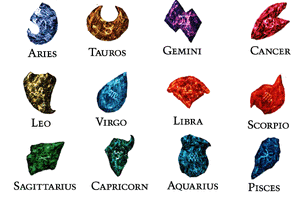
Signs of the Zodiac
Pick a random day on the calendar. Look up the astrological characteristics for a person born on that day. Now, create a villain based on those characteristics.
For example: Say you picked today. That would make your villain a Cancer. Cancers are highly emotional, they're very strong-willed, and are usually night owls. This could be fun for a villain. A Cancer villain would have very deep motives, stemming from a past hurt or betrayal. This could either be a villain that the player would sympathize with, or one that would scare the player half to death.
If I were a villain, I think I'd be closer to the second one.
Tuesday, June 23, 2009
Opening Cutscenes

Your prompt: Create a great opening cutscene. It can either be full of talk or speechless.
Reasons for speechlessness: A video game script doesn't just have dialogue. It has narration. A game script's narration is usually short and to the point, but there is plenty of it. A great opening isn't always full of talk. Sometimes confusion or an adrenaline rush can suck in a player.
Other notes: Even if your opening has no talking, be sure to involve sounds in your description. Sounds add tons of depth to any game.
Examples of great openings:
Final Fantasy 8
This cutscene has absolutely no speaking. The reason this make a great intro is because it shows many elements of the game: relationships, action, and future events. The music gives a nice adrenaline kick as well.
Prototype (CAUTION: This is a M17 game. It contains graphic violence. Like, people getting cut in half violence.)
This is a great opening because not only do you see really wicked action, but you learn the story of the character you're playing. Even with my weak stomach, I'm itching a bit to play this game myself because the story is so facinating. (Even if it is a bit of a I Am Legend steal.)
Uncharted
I like this opening because it makes me laugh. Ok, there are more reasons than that to as why it's a good opening. You learn about the characters you're going to be spending a good week looking at. The story is set up and when that is settled, it goes straight into the action. Perfect!
Kingdom Hearts 2
This is a very complicated opening, which makes it so great. Not only is this the opening to KH2, but it's a synopsis of the events in KH1 and KH: Chain of Memories. So it's like 3 games meshed in one. Not easy. This is another opening with no real talking other than the song lyrics.
Thursday, June 18, 2009
Bully
System: XBox 360/PS2/Wii/Windows
Release: 2006/2008
Developer: Rockstar
PLAY THIS. I don't think I could be clearer about it. Rockstar is a company that has some of the best character and humor writing. Rockstar is famous for their sandbox games, including Grand Theft Auto.
So what do I give it?
Plot: 5/5
Characters: 5/5
Side Quests: 5/5
Plot
The basis of Bully is that you play as the new kid at a boarding school that seems to be especially made for juvenile delinquents. Trying to survive relentless attacks by jocks and bullies, you try to make your way to the top of the social food chain.
The plot is simple enough, but almost anyone can identify with it. If you've ever been picked on in school, it feels great to walk up to a character in one of these games and just glass jaw him.
The main idea in this game is to earn respect of everyone in your school by doing jobs for people. Starting at the bottom of the totem pole with nerds, you slowly make your way up to the top. Your only accomplices are Pete, a wimpy follower, and Gary, a psychopath that I'm glad I never went to school with.
So Gary convinces you to take over the school, then betrays you and tries to get you to fall to the bottom of the food chain and tries to take over the school himself. So not only do you have to defend yourself against bullies and Fonzie wannabes, but you have to find Gary and destroy him before he destroys you.
In the end, you set Gary up and the principal gets him expelled. You're the top of the food chain. But only in Video Game Land. Sorry.
Characters
Jimmy
Even though Jim is a type of live-and-let-live type of character, he also helps others---at a price. Jim has a great amount of complexity in him, which is why I like him. He's got an attitude problem (that you can tell is from his lack of decent parents), he doesn't want to deal with anyone, and yet he still manages to become the most popular guy in school by helping everyone. For the goody-two-shoes (Does anyone understand that expression? Do rebels only wear one shoe or something?) that never talked back to teachers or meddled with school property, you will be surprised at Jim's behavior, but the teachers' behaviors kind of balance it out.
Gary
This kid doesn't belong in school, he belongs in a psychiatric ward. This kid makes an excellent teen villain due to the fact that he's absolutely crazy. Almost Kefka crazy in a sense. Finally releasing himself from medication, Gary goes nuts and tries to destroy Jimmy in order to get the school for himself. (Why is it that crazy people are the first to pursue big dreams?)
Other Characters
There really aren't a lot of major characters. They're evenly distributed throughout the game. The most interesting thing about the characters in this game is that they aren't copies. Each one has a name and personality. That's definitely a rarity in a sandbox game.
Side Missions
The funny thing about missions is that they were so much like the mainstream ones that I couldn't tell the difference. Some of them were a little more disturbing mind you, for example, getting your butt ugly lunch lady a date as she spits in the vat of mystery meat; but all in all they went seamlessly into the gameplay. It really is the best mission writing I've seen thus far.
Final Say:
Play it! Don't ask, just do it!
Other notes:
How about a female sandbox game, Rockstar? Why should guys get all the fun of hitting people, stealing cars, and pissing off authorities?
Tuesday, June 16, 2009
Prompt: Princesses
Sweet and Sincere
These girls are quick to think, slow to anger, and even slower to say anything. If they say anything relevant at ALL, it usually ends up being something timid and philosophical.
Punk Princess
These princesses usually have armor, a sword, and sometimes less clothes than normal people. They're quick to anger, quick to speak, and usually end up destroying one thing or another in the process.
The –Not So Secret-- Princess
Yes, yes. You're really a princess. We NEVER saw that coming. Come on.
Your prompt: Come up with a princess. Make her original. Make her deep. Make her bigger than a size 2. (Why are all princesses so TINY?)
Monday, April 13, 2009
Technical Writers
Picture from www.freefoto.comThe writing field of video games almost seems top secret when all attention is drawn towards gameplay, level design, and whether or not stuff explodes. Few and far between know about all the work that goes into sending out memos to all departments, throwing together an instruction manual, or the 500 page game design document that is poured over before a game's production.
Thanks to www.igda.org, I was able to talk to Megan Wiseman, the technical writer for Red Storm Entertainment. Although Red Storm may not be as large as its parent company, Ubisoft, there is still a ton of work involved for a technical writer. See for yourself!
1) How did you get on board as a technical writer of Red Storm Entertainment?
Well, this job kind of fell into my lap. I had a friend who worked at Red Storm, and I originally had been thinking I would try to get on in the Design department--I do creative writing as well, but I don't have anything published yet. So I really didn't have the actual stuff on my resume to break in that way. But last summer, my friend contacted me and said "We desperately need a technical writer, and no one we've interviewed has a clue, or is even someone we like. I like you and I know you know your stuff, PLEASE apply." So I did. And I got hired.
2) What is your typical day at work?
Well, my day is about the same as anyone else's. Or about the same as any other technical writer's. I come in to work, I look at my task list, I pick a task and start working. If you are looking for the types of tasks that I do...that is highly variable, but that is addressed in the next question. If you want a walkthrough of my day...I get coffee; I banter with my co-workers; as I said I pick tasks to work on; I do some work; I banter some more; I might go talk to someone else in the company if I need additional input or have questions about something; I might set up a more formal sit-down meeting if I have several things to ask or several people to address at once. I usually have a brief check-in meeting with my supervisor once a week to let him know what I'm working on, what I am having trouble with, what questions I have, etc. We have a company meeting once a week where all departments give updates. Generally my day is pretty fun, though--I get to hear people talking about the different parts of the projects they are working on, brainstorming ideas for new projects, working through storyboards or blocking out scenes, etc. It's all very exciting.
3) What tasks are you in charge of?
I've done a little work on a game manual, but most of my work has to do with the documentation that the engineers produce in the process of creating the game. How to use the game engine, the editor, and the software tools that attach to the engine; tutorials for the art team in how to use the software; tutorials by the art team for other artists on specific techniques to use in creating game objects; information about the networking and multiplayer capabilities of a game. I also work on process and policy documentation--in other words "how do we do things here?" Sometimes these are referred to as "best practices" documents. Eventually I'll also be documenting the documentation processes I create--meta-documents, or "documents about documents". Confused yet? I do a bit of everything. Mostly because I'm the only one. Eventually a lot of this will be delegated. I hope.
4) Which tasks do you find most rewarding?
That's a tough call. I enjoy working on manuals, though it's a small proportion of what I do now. At the moment my boss is asking me to focus more on "big picture" projects, having to do with the overall organization of our documentation, and our infrastructure for creating, storing, and distributing that documentation. What I'm doing now could be seen more as "information management" or even "information architecture". I'm also working on a project to completely re-do our company portal or intranet. So those are the biggest things, and I think once we get them done it will improve overall productivity and efficiency at the company, so I think it will have a big impact. That makes me feel pretty good.
5) Which tasks do you find most challenging?
See above! While it's rewarding to work on something that will impact the entire company and improve things on a big scale, it's also something I've never done before. I've never been in charge of infrastructure, developing standards, creating processes wholecloth, or building a company portal/intranet from the ground up. All of it is new to me. Additionally, I appear to be one of the few (maybe the only) actual "technical writer" who is labeled as such in the video game industry. Thus, it's a very challenging job.
6) Who do you work with for information and tasks?
I work with just about everyone in the company, but that's because my job function is still being worked out to a large degree. Right now, I'm in charge of ALL the documentation, for ALL departments in the company. Even though we're still a fairly small studio we're growing fast, and have more than 100 employees so it's a daunting task. I'm still getting to know what all the parts are, and who everyone is, and I'm still defining what needs to be done. I work with the heads of departments, company management, group leads, and some individuals. It depends on the task I'm working on. If I need a particular piece of information or a question answered, I'll go to an individual I think might have what I need. If I'm trying to get more general information or a bigger vision of what needs to be done on a task, I might choose a group lead, a department head, or even company management as a whole. When I was working on the one manual I have worked on so far, I worked with the testing team a lot, as well as the lead designer and the producer on that project. So it just depends on the task.
7) What skills or education are required to be a technical writer?
In general, technical writers can have a pretty broad skill set and educational background. As for me, I had an English degree and some personal background in various technical areas. I was fascinated by computers so I had a small degree of knowledge about them, and more important I had the curiosity and interest to learn more. I think that is probably the key skill or talent you need--curiosity and a desire to learn more about just about any area of interest. If you can summon up your curiosity about even a topic you never thought to investigate before or didn't think you would be interested in, you can probably do a good job. Because a technical writer usually stands in for a particular audience, you see. The people with the information you need are so close to the subject they know that they have forgotten what it's like for someone who *doesn't* know what they know. So the writer has to represent all those folks who need the information that engineer or programmer or whoever has in their brain.
So the skills you need are:
--> Good writing skills (grammar, spelling, punctuation, ability to communicate clearly and accurately, ability to write for a particular audience);
--> Curiosity;
--> Ability to get along with and talk to many kinds of people;
good interviewing skills (ask open-ended questions, create more questions based on answers you get, etc.);
--> Ability to think logically as well as creatively;
--> Good editing skills (sometimes you'll have an editing department but more often you'll do your own or you'll have peer edits only)
8) Are you a permanent employee or is it a project-by-project type of job?
I'm a permanent employee.
9) How much demand is there for the tech writer field? How much do small companies rely on a tech writer? What about larger companies, such as your parent company, Ubisoft?
You know, I really don't know the answer to this question. On the one hand, I seem to be one of the few (or only, as I said) technical writers who actually hold that title within the industry. I think that's because so many studios are general small, and even larger companies are usually made up of several smaller divisions or studios. So in general I think people in the industry tend to multi-task and have variable skills sets. Given that, I would say a lot of technical writing gets done, but probably by people who aren't labeled as technical writers as such.
I really don't know what the state of the industry in general is or will be for a technical writer. I think there is definitely room for technical writers within the industry if you can find a company who is willing to hire you. The key, as in all areas of the game industry, is to diversify your skill set; make sure you know video games and love them; and network, network, network! If you are capable of doing something besides just technical writing (game design, programming, 3D graphics, game writing, etc.) you'll probably be a better sell just because most studios, even big ones, are looking for the most bang for their buck. A lot of the technical documentation created at most studios is likely created either by the engineers (meaning it's likely not very well organized, or very clearly written, unless that engineer also happens to have training in technical writing) or its done by the design writers (which could mean anything; most of them at least will have fairly strong writing skills but may not have experience or training specifically in technical writing).
10) Is there any extra information or advice you’d like to give people interested in this field?
First and foremost, don't give up. I first met my friend and became interested in working for his company in 2004-2005. It therefore took me four years at least to get this job! Granted, I wasn't working actively to get in that entire time. I imagine I would have gotten in sooner if I had. But my point is, it can take time to gather the skills and experience you need, or to meet people who can help you position yourself correctly to break in. So perseverance is important. KNOW VIDEO GAMES. KNOW YOUR WRITING CHOPS. Those are the two most important things, I think, besides perseverance and patience. It's not vital to know and play all genres of games, but the wider your knowledge base the more likely you are to impress whomever you try to get a job with.
Thanks goes to Megan for her time!
Thursday, April 2, 2009
The Game Design Document
I'll be honest: I've only written about 5 or 6 college GDD's and they were pretty lame by anyone's standards. So me telling you how design a GDD would be hilarious to the professionals, who have websites dedicated to the stuff.
Instead of telling you how to make one, I'm going to go into what a GDD actually is and what it accomplishes. I will also add in some links to websites if you'd like further help in creating the documents themselves.
What is a game design document?
A GDD is a humongous stack of papers that tells everyone on a gaming staff what the game is, how it works, and every single small and large detail incorporated within the game. It's an exhausting document that makes Leo Tolstoy's War and Peace seem like a children's book. Grant you, the less complicated the game, the shorter the GDD. But for large game worlds like Grand Theft Auto or Kingdom Hearts, these documents can be anywhere from 200-1000 pages.
Who is in Charge of Writing it?
This usually depends on the company. The most common way of doing it is to have everyone fill out their own pieces and then the lead designer puts it together and makes it shiny. If there is a technical writer on the staff (which isn't as common as you may think) they usually have a hand in it.
Why do games need such a big friggin document?
If you're a studio of 3 or 4 working in someone's mother's basement making an arcade game, maybe you only need a few pages of memos. But if you are Ubisoft, Square-Enix, or EA Games and employ 100s of people, you're going to need one.
A GDD tells everyone what's going on at any time. If something changes, it's in the GDD. It may not seem like it, but this document saves buttloads of time down the road.
Not only is it important for the developers, but for the publishers as well. They look at the GDD to see if they want to fund the developer or not.
So make sure it doesn't suck.
What does a GDD Cover?
Everything. Seriously. Here's a list of some of the things a GDD covers:
- Why you should play this game
- What sets this game apart from others
- Characters and Controls
- AI and Enemies
- How the World is Set Up
- Storyline
- Graphics and Engines
- Scales and Objects
- Camera and Lighting
- Interface and Sounds
- Weapons, Health, and Special Abilities
- Single Player vs Multiplayer
- Etc
How does the template work?
Depends on the company. There really is no set way of making a GDD except for a few things: First, the beginning pages are the ones that make the readers (AKA publishers) excited about making the game. Second, there is always a well written table of contents. And third, everything about your game is easy to find and well written.
Other Notes
GDDs aren't really meant to be particularly exciting nor creative. They're just a reference for publishers and developers. So if you're a college student and you find writings up GDDs boring, just be grateful yours will only be 5-20 pages instead of 500.
Conclusion
All game companies have GDDs. If you want to be a game designer, you're going to have to learn how to write them well. If you want to become a game writer, it wouldn't hurt to know the strings.
Great Links
http://www.gamasutra.com/features/19970912/design_doc.htm
http://www.sloperama.com/advice/specs.htm
http://www.thecorpament.com/the_importance_of_design_docs_in_game_development.html
Templates
www.runawaystudios.com/articles/ctaylordesigntemplate.doc
http://www.cowgodgames.com/articles/designdoctemplate.htm
Examples
https://www.digipen.edu/fileadmin/website_data/gallery/game_websites/Claustrosphere/GDD.pdf
Tuesday, March 31, 2009
Poll: Best Narrative
RPG
These games are usually the ones with the deepest, most complex storylines. They are also prone to really annoying plot twists and lame characters. These types of games are usually best for people that play games mainly for storyline and rarely for gameplay. Examples of this genre are the Final Fantasy Series and Kingdom Hearts.
ACTION/ADVENTURE
If you like a simple storyline along with blowing up or slashing stuff, this is the genre for you. In these types of games, storylines and dialogue are used only in medium strength for background information. This genre, however, is becoming more in depth and may turn out to be as highly developed as RPGs in the future. Examples of these types of games are Call of Duty or Fable.
SANDBOX
Sandboxes are big worlds in which a player can do whatever s/he wants. Rockstar is a great example of sandbox game writing, with such titles as Bully and Grand Theft Auto. Writing is mainly for entertainment purposes, seeing as how most sandbox games are mission based. The writing in these games are to enrich a game world, not so much to make you see what happens next.
STRATEGY
Go here. Destroy these guys. Blow up this base. To me, this is about the extent of strategy writing. The story depends on the game. Turn based and tactical strategy games usually have the strongest of storylines, while games that lean onto the simulation side will have a fainter one. Examples of these games are Ceasar III, Phantom Brave, and Warcraft.
Which do you choose?
Writing Prompt: Synopsis
Here is your assignment:
Look at 2 or 3 games and write a synopsis of the game's storyline and gameplay. Tell us what makes it different from other games. After that, come up with your own game concept and tell us why it rocks.
Tips: Game Design Documents are usually not meant to be highly entertaining, they are used as a reference for all the staff working on a game. However, a synopsis should be interesting in order for a publishing company to be enticed by it. Be interesting, but highly professional. Don't write, "This game rox cause when you blow someone up his eyes bust out of his face and land in two different places!"
Yeah, don't do that.
(Psst... Want to know more about Game Design Documents? Come back on April 2nd.)